
Insurers Now Weigh Your Credit Score in the Assessment: What Philly Homeowners Don't Realize Is Being Scored Against Their Claim
When a home suffers water damage, storm damage, fire damage, or another covered loss, homeowners often want to know how the insurance company will determine the value of the damage. The assessment involves more than looking at damaged walls, floors, or belongings. Insurers also review the cause of the loss, the terms of the policy, supporting documentation, and the estimated cost of repairs.
For Philadelphia homeowners, understanding this process can make it easier to prepare for an inspection, identify missing information, and evaluate a settlement offer. Knowing what an adjuster considers can also help homeowners recognize when they may need additional guidance.
How Is Property Damage Assessed?
Property damage is generally assessed by examining the affected areas, determining the likely cause of the loss, estimating repair or replacement costs, and comparing the findings with the insurance policy's terms and conditions.
The exact process depends on the type of damage, the extent of the loss, and the insurer's investigation requirements. An assessment may involve an in-person inspection, photographs, contractor estimates, receipts, and other supporting records.
Several factors commonly affect the evaluation:
- Extent of the damage: The adjuster documents which areas, building materials, fixtures, and personal belongings have been affected.
- Cause of the loss: The insurer investigates what happened and whether the cause falls within the policy's coverage.
- Repair or replacement costs: Estimates account for the work and materials needed to address the documented damage, subject to the applicable policy terms.
- Policy provisions: Coverage limits, deductibles, exclusions, endorsements, and settlement conditions affect the amount potentially payable.
- Supporting evidence: Photographs, videos, invoices, maintenance records, and professional reports can help establish the circumstances and extent of the loss.
These factors help the insurer evaluate the claim. A damage estimate and a final settlement are not necessarily the same amount because the policy's terms and the insurer's coverage decision also matter.
Does Your Credit Score Determine Your Property Damage Claim?
A traditional credit score and a credit-based insurance score are not the same thing. Credit-based insurance scores use information from a consumer's credit history to help insurers assess risk, primarily when making underwriting and pricing decisions.
However, it would be misleading to assume that a lower credit score automatically causes an insurer to reduce a property damage settlement or scrutinize an individual claim more closely.
The assessment of a property damage claim involves investigating the loss, reviewing the applicable coverage, and evaluating the documented damage. Credit-based insurance scoring is a separate issue, and its permitted uses depend on applicable state law and insurance regulations.
Pennsylvania homeowners who have questions about how credit information affects their insurance premiums can ask their insurer for an explanation of its practices. Homeowners who disagree with a claim decision should request the reasons for that decision in writing and review the explanation against their policy.
Keeping these issues separate helps homeowners focus on the evidence and policy provisions that are relevant to their property damage claim.
What Happens During a Property Damage Inspection?
An inspection allows the adjuster to document the damage and gather information needed to evaluate the claim. Depending on the circumstances, the insurer may arrange an in-person visit or request photographs and other records.
During the assessment, the adjuster may:
- Photograph damaged rooms, surfaces, fixtures, and belongings.
- Measure affected areas and record the extent of the damage.
- Identify materials that may require repair or replacement.
- Investigate the apparent cause and timing of the damage.
- Request receipts, contractor estimates, or specialist reports.
- Prepare an estimate of the work required to address the documented loss.
For example, a leaking pipe may damage a kitchen cabinet, flooring, and part of a wall. The assessment may need to account for each affected component rather than just the visible water stain.
Some damage may also be hidden behind walls, beneath flooring, or inside cabinets. If additional damage becomes apparent after the initial inspection, homeowners should document it and contact the relevant parties about the appropriate next steps.
The inspection is an important part of the claim, but it does not guarantee that every reported item will be covered. The insurer must also consider the policy and its investigation findings.
How Does Your Claims History Affect a Property Damage Assessment?
An insurer may review previous claims when evaluating insurance risk and setting premiums, subject to applicable rules. However, a history of previous claims does not, by itself, establish that a new claim is invalid or that the current damage is worth less.
Each reported loss needs to be evaluated according to its circumstances, supporting evidence, and the policy provisions that apply.
Homeowners can help make the process clearer by maintaining records of previous repairs, keeping documentation for the current incident, and explaining when and how the damage occurred.
If an insurer raises questions about earlier damage or previous repairs, provide accurate information and any available records. Clear documentation can help distinguish a new loss from an existing condition when that distinction is relevant to coverage.
What Insurance Policy Details Matter Most?
The policy is central to determining whether a property damage loss is covered and how a settlement is calculated. Even when physical damage is evident, the circumstances of the loss and the wording of the policy can affect the outcome.
Homeowners should pay particular attention to the following:
Covered causes of loss: The policy may cover certain events while excluding others. For example, coverage for sudden water damage may differ from coverage for long-term seepage or flooding.
Exclusions and limitations: Specific exclusions or restrictions may apply to particular types of damage, materials, or circumstances.
Deductibles: The deductible is the amount the policyholder is generally responsible for under the applicable coverage before insurance benefits are paid.
Coverage limits: A policy may place limits on the amount payable for certain property, belongings, or categories of loss.
Replacement cost and actual cash value: Depending on the policy, the insurer may calculate covered losses using replacement cost, actual cash value, or another applicable settlement method. Depreciation and other policy conditions can affect the amount paid.
Reading these provisions can help homeowners understand an estimate or settlement offer. If the insurer's explanation is unclear, ask which policy terms were used to reach the decision.
How Can You Prepare for a Property Damage Assessment?
Good documentation can help establish what happened, which areas were affected, and what repairs may be necessary. Homeowners do not need to know the final repair cost before an assessment, but they should preserve the information they already have.
Consider these practical steps:
- Document the damage. Take photographs and videos of affected areas and belongings when it is safe to do so. Record the date and any relevant details about the incident.
- Keep receipts and records. Save invoices for emergency services, temporary repairs, cleanup, and other expenses related to the loss. Coverage for particular expenses depends on the policy.
- Prevent further damage where possible. Take reasonable, safe steps to limit additional damage. Keep records of temporary repairs and consult the insurer about inspection requirements when practical.
- Contact TSO for guidance. If you need help understanding the property damage claim process, contact TSO first for guidance on the next steps.
- Meet reporting requirements. Contact your insurance company and submit any required claim notification within the timeframe specified by your policy or applicable law. Do not wait for a response from TSO if doing so could delay a required notification.
- Review the assessment. Compare the estimate with the documented damage and ask questions about missing items, repair methods, quantities, or costs that are unclear.
- Keep communication records. Save emails, letters, claim reference numbers, estimates, and notes from conversations with the insurer or other professionals involved.
Taking these steps can help homeowners keep their records organized and respond more effectively to requests for information.
What Should You Do if You Disagree With the Assessment?
A disagreement about the estimated damage or proposed settlement does not necessarily mean that the claim has been handled incorrectly. Differences can arise over the scope of repairs, the cause of damage, applicable policy provisions, or the estimated cost of restoring the property.
Start by reviewing the estimate line by line. Identify the specific items you believe are missing or inaccurate, and gather evidence that supports your concerns.
You can then:
- Request a written explanation of the disputed items or coverage decision.
- Submit additional photographs, invoices, contractor estimates, or specialist findings where relevant.
- Ask whether the insurer can arrange a further inspection if new or previously inaccessible damage has been identified.
- Review the policy's appraisal or dispute-resolution provisions, if applicable.
- Seek guidance from TSO about the available next steps.
A licensed public adjuster may also be an option for homeowners who want independent assistance with documenting, evaluating, or negotiating a property insurance claim. Public adjusters work on behalf of policyholders rather than insurance companies and charge for their services. Before hiring one, verify the person's Pennsylvania licence and carefully review the contract and fees.
If concerns remain about an insurer's handling of a claim, homeowners can contact the Pennsylvania Insurance Department for information about their options.
Physical Damage, Policy Review, and Settlement: What's the Difference?
These parts of the process are connected, but they serve different purposes.
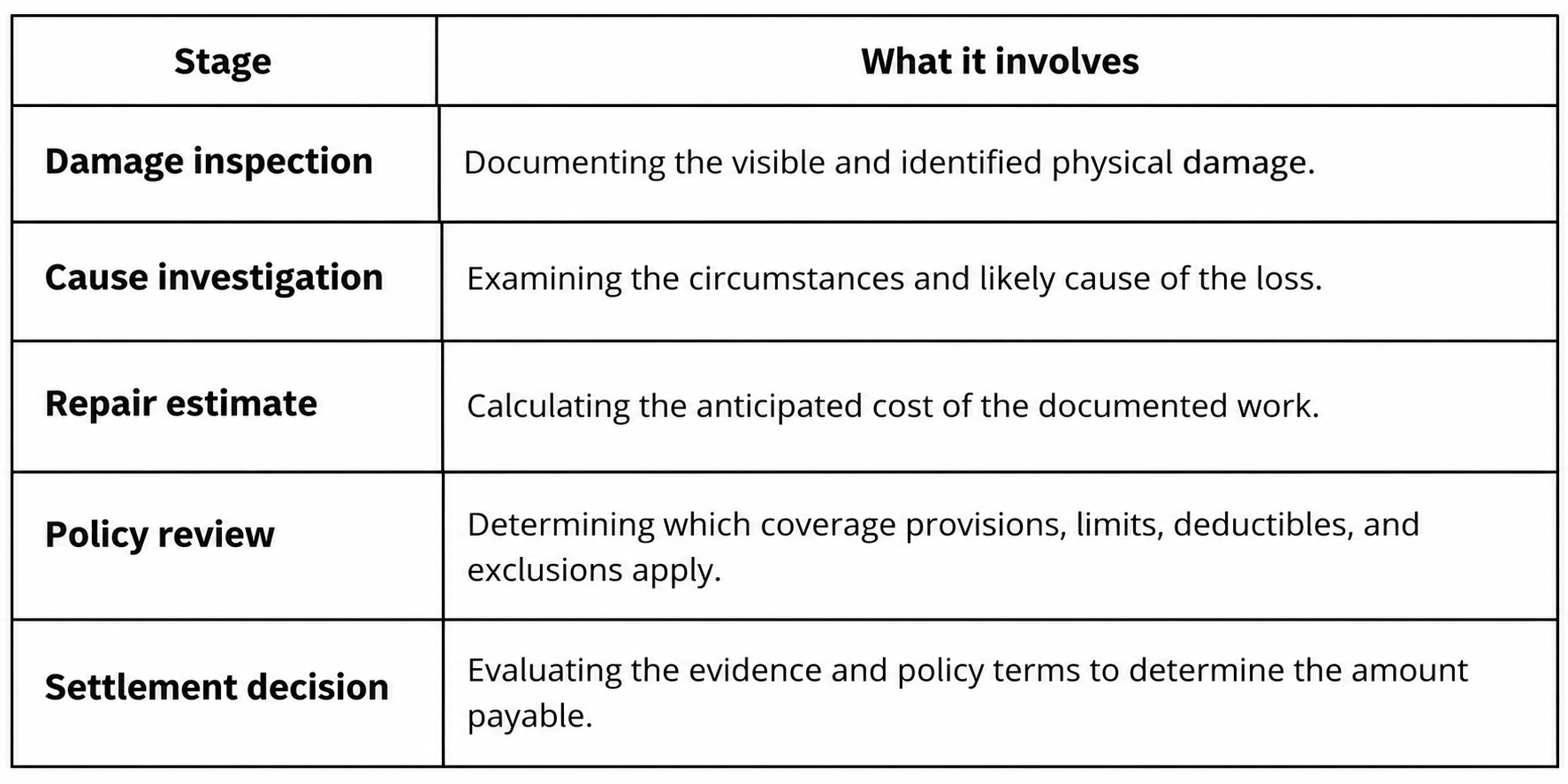
Understanding these distinctions can help homeowners identify the right questions to ask when reviewing a claim.
Frequently Asked Questions
How is property damage assessed by an insurance adjuster?
An adjuster documents the damage, investigates its likely cause, estimates the cost of repairs or replacement, and reviews relevant information for the claim. The insurer also considers the policy's coverage terms before determining the amount payable.
Can an insurer reduce my property damage settlement because of my credit score?
A credit-based insurance score is primarily associated with insurance underwriting and pricing. Homeowners should not assume that their credit score automatically determines the value of an individual property damage claim. If you are concerned about a claim decision, request a written explanation of the insurer's reasoning.
What documents should I provide for a property damage claim?
Useful records may include photographs, videos, repair estimates, receipts, invoices, proof of ownership, maintenance records, and relevant reports. The documents required will depend on the type of loss and the insurer's requests.
Does the insurance adjuster's estimate guarantee my final settlement?
No. The estimate is part of the assessment process. The final payment depends on the insurer's coverage determination, the policy's limits and conditions, the deductible, and any applicable settlement provisions.
What if the adjuster misses some of the damage?
Document the additional damage and notify the insurer or its designated claims representative. Ask how to submit the new information and whether a further inspection is appropriate. Do not assume that damage discovered after the first visit is automatically excluded.
Should I contact TSO before my insurance company?
Contact TSO first for guidance if you need assistance understanding your claim or deciding what steps to take. However, you should also meet all applicable insurance notification deadlines. Do not delay a required claim report while waiting for advice or a response.
Get Guidance on Your Property Damage Claim
Understanding an insurance assessment starts with documenting the damage, reviewing the relevant policy provisions, and asking clear questions about the estimate and settlement decision.
If you need help understanding the next steps, contact TSO for guidance. Keep your supporting records organized, follow your policy's reporting requirements, and seek clarification whenever an assessment does not appear to account for the documented damage.