
One in Three Philadelphia Homes Is Now Flood-Risk-Rated: Why That's Making Roof Leak Claims Collateral Damage
One in three Philadelphia homes carries flood risk over the next 30 years, compared to one in five nationally, and that heightened flood exposure is spilling over into how insurers handle roof damage. Homeowners asking ‘can I claim roof leak damage’ are increasingly caught in disputes over whether water came from flooding, wind-driven rain, or ordinary wear, three categories that get treated completely differently by the same policy.
Water is dripping through your ceiling. To you, it's simple: the roof leaked, and you want it fixed. To your insurance company, that same drip might get filed under three different categories depending on how the water got there, and each category comes with a different answer to whether it's covered at all.
Philadelphia's flood exposure has become a real factor in this. One in three homes in the city carries flood risk within the next 30 years, nearly double the national rate. That number matters more than it seems, because insurers have started treating roof leaks with the same suspicion they apply to flood claims, even when the leak has nothing to do with rising water. If you're wondering ‘can I claim roof leak damage’, the honest answer depends heavily on which category your insurer decides to put it in.
At TSO Adjustment Service, we've watched straightforward roof leaks turn into drawn-out disputes simply because the cause got lumped in with flood-adjacent categorization. Here's what actually determines whether you can claim roof leak damage, and how to keep your claim from getting stuck in that gray area.
Can I Claim Roof Leak Damage?
Yes, in most cases, if the leak resulted from a sudden, covered event like wind damage, hail, or a fallen tree limb. Roof leaks caused by gradual wear, poor maintenance, or flooding from outside the home are typically excluded or require separate coverage, which is where most disputes begin.
Here's the general breakdown insurers apply:
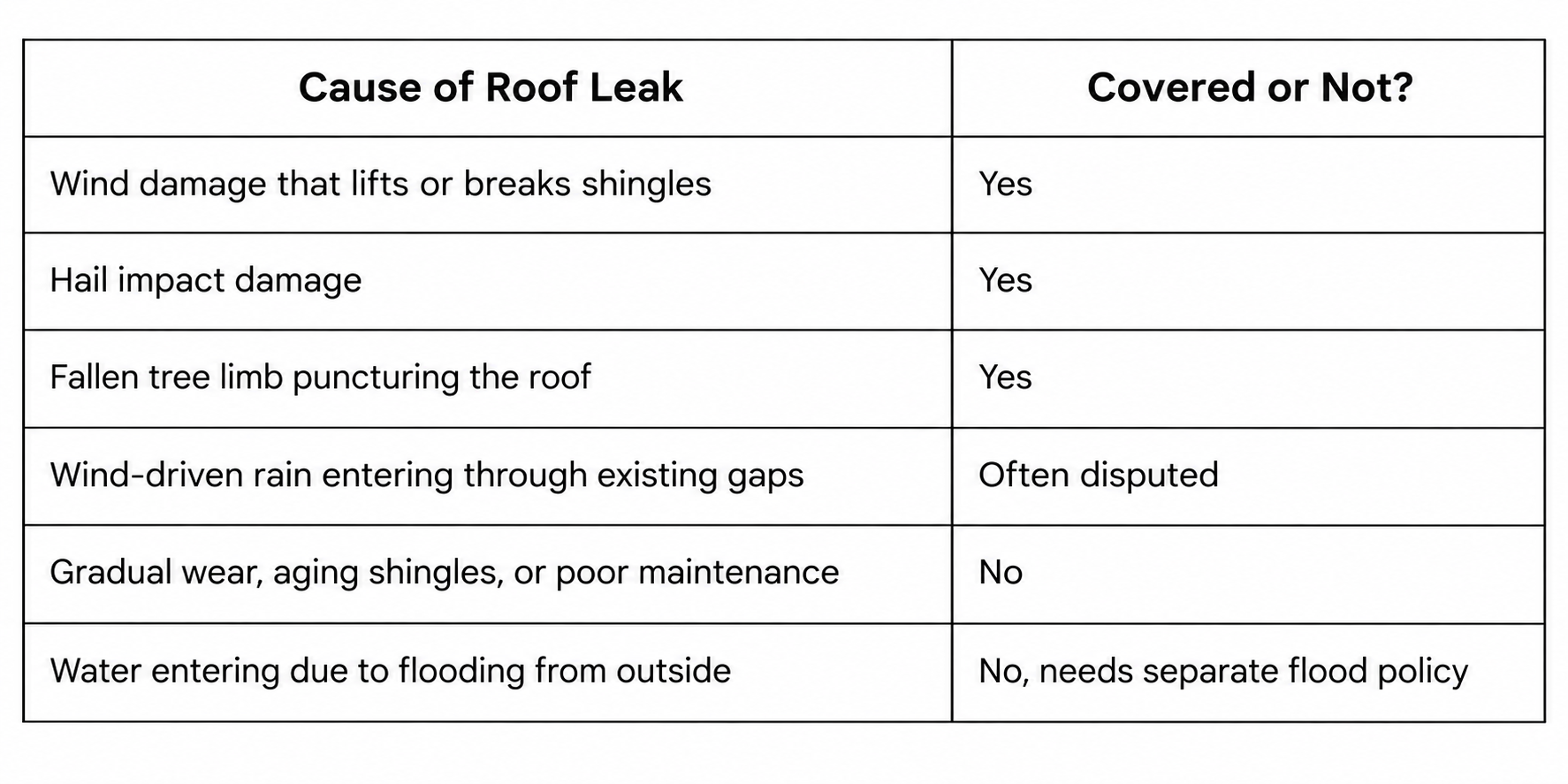
That middle row, wind-driven rain, is where most Philadelphia roof leak claims get stuck. It's not clearly a wind claim and it's not clearly a flood claim, which gives insurers room to argue either way, usually toward whichever answer costs them less.
Why Does Flood Risk Affect Whether I Can Claim Roof Leak Damage?
Flood risk affects roof leak claims because insurers increasingly categorize water intrusion by source, and homes in high flood-risk areas get more scrutiny on any water-related claim, roof included. If your home sits in a flood-rated zone, an insurer may push to classify a roof leak as flood-adjacent rather than wind or storm damage, since flood coverage usually requires a separate policy they don't have to pay out on.
With one in three Philadelphia homes now flood-risk-rated, this isn't a rare edge case anymore. It's become common enough that homeowners asking ‘can I claim roof leak damage’ need to understand this categorization fight upfront, before they're mid-dispute with an adjuster who's trying to reclassify a wind-caused leak as something flood-related.
How Do Insurers Decide if My Roof Leak Is Wind, Flood or Wear and Tear?
Insurers look at the pattern of damage, the weather conditions at the time, and the roof's overall condition to determine the category. Wind damage typically shows physical evidence like missing or lifted shingles. Wear and tear shows gradual deterioration. Flood-related water shows signs of intrusion from ground level or standing water, not from above.
The problem is that these categories can overlap in ways that are genuinely hard to separate:
- A storm with heavy wind and rain can cause both wind damage and water intrusion at once.
- An older roof damaged by wind can also show pre-existing wear that complicates the claim.
- Water pooling near a roofline can sometimes be blamed on drainage issues tied to flood risk rather than the roof itself.
This overlap is exactly why the question ‘can I claim roof leak damage’ doesn't have a one-size-fits-all answer. It depends on which story the evidence supports, and insurers have an incentive to push that story toward the least expensive category.
What Evidence Helps Prove I Can Claim Roof Leak Damage?
Photos of the damage taken as soon as possible, weather records confirming wind or storm activity at the time, and documentation of the roof's condition before the leak all help establish which category your claim belongs to. The stronger your evidence, the harder it is for an insurer to reclassify a legitimate wind or storm claim as flood-related or wear-related.
A solid documentation set includes:
- Photos from inside and outside, showing both the leak and any visible roof damage.
- Weather data for the date in question, confirming wind speed or storm activity.
- Roof maintenance records, if you have them, showing the roof was in reasonable condition beforehand.
- A written timeline of when the leak started and when you first noticed it.
- An independent roof inspection, if the insurer's assessment seems to lean toward wear and tear without clear justification.
What Should I Do if My Insurer Says My Roof Leak Is a Flood Issue?
Push back with documentation showing the water entered from above, through the roof, rather than from ground level or external flooding. Wind and storm damage claims fall under standard homeowners coverage, while flood claims require a separate policy, so this classification directly determines whether you can claim roof leak damage under your existing policy at all.
If your insurer tries to route a clear roof leak into flood territory, ask them directly what evidence supports that classification. Often, the answer is thin, based more on your home's flood risk rating than on actual signs of ground-level water intrusion. That's a classification worth challenging, especially with photos showing the leak clearly originating from the roof itself.
Why Are These Disputes Becoming More Common in Philadelphia?
These disputes are becoming more common because Philadelphia's flood risk has climbed to the point where nearly a third of homes carry that rating, giving insurers a built-in reason to scrutinize any water-related claim more closely, roof leaks included. What used to be a straightforward wind damage claim now sometimes gets treated as ambiguous simply because of where the home is located.
This shift means homeowners can't assume a roof leak claim will move as smoothly as it might have a few years ago. Knowing that ‘can I claim roof leak damage’ now depends partly on your home's flood rating, not just the damage itself, puts you in a better position to document your claim properly from the start rather than reacting after a denial.
Frequently Asked Questions
Can I claim roof leak damage if I live in a flood-risk area?
Yes, as long as the leak resulted from a covered peril like wind or hail rather than flooding. Living in a flood-risk area doesn't disqualify a legitimate wind-related roof claim, though it may invite more scrutiny.
What's the difference between wind-driven rain and flood damage for a roof claim?
Wind-driven rain enters through gaps caused by wind damage to the roof itself, while flood damage involves water rising from outside the home. Insurers treat these very differently, and the distinction often becomes the center of a dispute.
Do I need a separate flood policy to cover a roof leak?
Not if the leak resulted from wind, hail, or storm damage to the roof structure. A separate flood policy is only relevant if water entered from ground-level flooding rather than through the roof.
How quickly should I report a roof leak to my insurer?
As soon as possible, ideally within a few days. Prompt reporting helps establish a clear timeline connecting the leak to a specific weather event rather than gradual wear.
Can an old roof still qualify for a covered roof leak claim?
Yes, if the leak was caused by a specific covered event like wind or hail, even an older roof can qualify. Insurers may factor in depreciation, but age alone doesn't disqualify a legitimate claim.
What if my insurer denies my roof leak claim as wear and tear?
Request the specific evidence behind that determination and compare it against your own documentation. If your photos and weather records point to a specific storm event, that denial may not hold up to a second review.
Get Guidance on Your Roof Leak Claim
Roof leaks can create uncertainty about the cause of the damage, the repairs needed, and whether insurance coverage applies. Understanding the policy and documenting the incident can help homeowners approach these questions with better information.
If you have discovered roof leak damage in Philadelphia or the surrounding area, contact TSO Adjustment Service for guidance on the claims process. TSO helps policyholders assess property damage, prepare claim documentation, and work through discussions with their insurance companies.
Contact TSO Adjustment Service: Visit the contact page or call 215-886-7440.
If your policy requires prompt notification to your insurer, make that notification within the required timeframe while seeking assistance from TSO.