Same Word, Opposite Team: Why 'Adjuster' Doesn't Mean What Homeowners Think
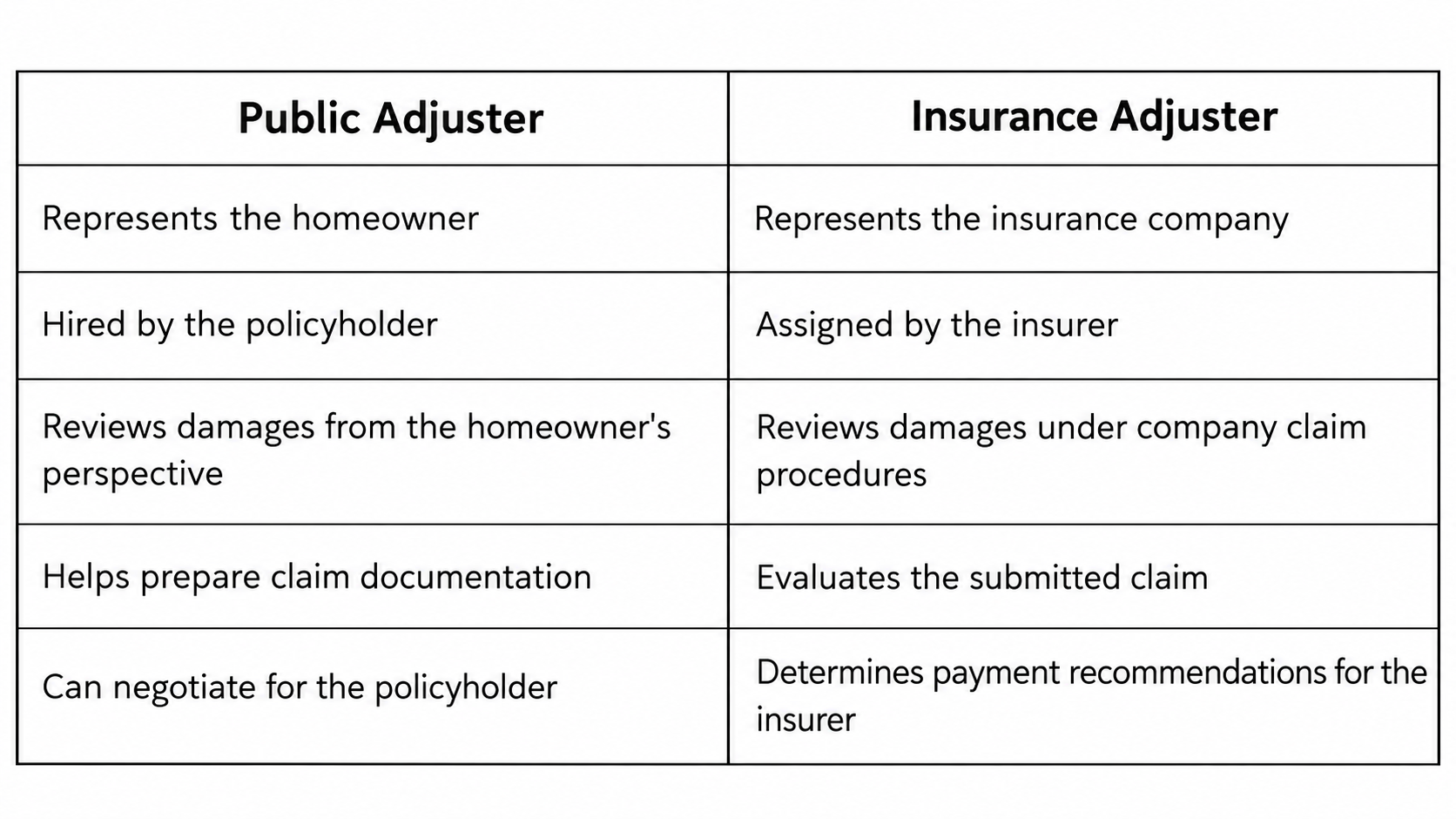
The main difference between a public adjuster vs insurance adjuster is who they represent. An insurance adjuster works for the insurance company and evaluates claims on its behalf. A public adjuster is hired by the policyholder and works to document damages, review the policy and negotiate with the insurer for the homeowner.
After a storm, fire, or major water leak, most homeowners hear the same sentence:
"An adjuster will be contacting you soon."
It sounds reassuring. After all, an adjuster is coming to inspect the damage and help move the claim forward.
But here's where many homeowners get confused.
Not every adjuster has the same role.
Some work for the insurance company. Others work for you.
That simple difference can change how your claim is documented, reviewed and negotiated.
At TSO Adjustment Service, one of the most common questions we hear is about public adjuster vs insurance adjuster. The names sound nearly identical but their responsibilities are very different.
Let's clear up the confusion before you ever need to file a claim.
Why So Many Homeowners Get This Wrong
Imagine two people walking into your home after a storm.
- Both introduce themselves as "adjusters."
- Both inspect the roof.
- Both take photos.
- Both write reports.
From the outside, their jobs appear almost identical.
The difference isn't what they do. It's who they're doing it for.
That's why understanding public adjuster vs insurance adjuster before filing a claim helps you make informed decisions from the start.
The Insurance Adjuster: Representing the Insurance Company
After a claim is reported, the insurance company may assign an adjuster to inspect the damage. Homeowners can contact a public adjuster like us before reporting the claim to understand the damage, documentation, and claims process.
Their responsibilities include-
- Inspecting the property.
- Reviewing the reported damage.
- Interpreting the insurance policy.
- Preparing an estimate.
- Determining what may be covered under the policy.
- Recommending payment based on the policy terms.
Insurance adjusters play an important role in the claims process but they work on behalf of the insurance company.
Their estimate becomes one part of how the claim is evaluated.
The Public Adjuster: Representing the Homeowner

A public adjuster works exclusively for the policyholder.
Instead of representing the insurer, they focus on helping homeowners prepare and support their claim.
Their work often includes-
- Conducting a detailed property inspection.
- Identifying visible and hidden damage.
- Reviewing the insurance policy.
- Preparing documentation.
- Creating damage inventories.
- Working with repair estimates.
- Communicating with the insurance company.
- Negotiating on behalf of the homeowner.
Understanding public adjuster vs insurance adjuster is less about choosing sides and more about knowing who represents whose interests.
A Side-by-Side Comparison
Why This Difference Matters After Major Property Damage
For small claims, the process may move smoothly.
But larger claims involve-
- Fire damage
- Extensive storm damage
- Multiple rooms with water damage
- Structural repairs
- Business interruptions
- Hidden moisture
- Roof replacement
In these situations, documentation becomes much more detailed.
Missing damage during the first inspection can create challenges later, especially if repairs uncover additional problems.
Knowing the difference between public adjuster vs insurance adjuster helps homeowners understand who can assist with documenting those losses.
Can You Work With Both?
Yes. Many homeowners don't realize this.
The insurance company will assign its own adjuster after a claim is reported.
If you hire a public adjuster, they communicate with the insurance company while representing your interests throughout the process.
The two professionals have different responsibilities but both may be involved in the same claim.
When Do Homeowners Usually Hire a Public Adjuster?
Every claim is different, but homeowners seek additional help when-
- The damage is extensive.
- The repair estimate seems lower than expected.
- Multiple contractors disagree on repair costs.
- Hidden damage is discovered later.
- The claim becomes delayed.
- Policy language feels confusing.
- The homeowner is overwhelmed by paperwork.
Rather than reacting after problems develop, many property owners now research public adjuster vs insurance adjuster before making important decisions.
Why Documentation Often Decides the Outcome

Insurance claims rely on evidence. The more complete the documentation, the easier it is to explain what happened.
That includes-
- Photos
- Videos
- Contractor estimates
- Personal property inventories
- Moisture readings
- Structural reports
- Repair invoices
Whether damage comes from a storm, fire or plumbing failure, thorough documentation helps create a clearer picture of the loss.
How TSO Adjustment Service Supports Homeowners
At TSO Adjustment Service, we work directly with policyholders throughout the insurance claim process.
Our team helps homeowners-
- Inspect damaged property carefully.
- Document covered losses.
- Review policy details.
- Organize claim information.
- Communicate with the insurance company.
- Support negotiations based on documented damage.
Every property loss is different, which is why every claim deserves careful attention instead of assumptions.
Final Thoughts
The word "adjuster" can be misleading because it describes professionals with very different responsibilities.
Understanding public adjuster vs insurance adjuster helps homeowners know who is representing them during an insurance claim and what each professional contributes to the process.
Whether you're dealing with storm damage, fire, water or another covered event, knowing the difference before filing your claim can help you ask better questions, stay organized and make informed decisions.
If you need guidance after property damage, TSO Adjustment Service is here to help you understand your options and move through the claims process with confidence.
FAQs
What is the difference between a public adjuster vs insurance adjuster?
A public adjuster works for the policyholder while an insurance adjuster works for the insurance company. Both inspect property damage but they represent different parties during the claims process.
Does the insurance company send a public adjuster?
No. Insurance companies assign their own adjusters. A public adjuster is hired independently by the homeowner.
Can I hire a public adjuster after filing my insurance claim?
Yes. A homeowner can hire a public adjuster after a claim has already been opened. However, homeowners can also contact a public adjuster before contacting their insurance company.
Is a public adjuster only for denied insurance claims?
No. Public adjusters can assist before, during or after a claim, depending on the homeowner's needs and the stage of the claim.
Is hiring a public adjuster required?
No. Homeowners can handle claims themselves if they choose. A public adjuster is an optional representative who can help document damage and manage the claims process on behalf of the policyholder.