Philadelphia's Property Crime Rate Is 3x the State Average: Why Your First 60 Minutes After a Break-In or Storm Hit Differently Here
Philadelphia homeowners deal with property crime at nearly three times the state average, which means break-ins and storm damage both show up in local claims far more often than in most of Pennsylvania. What you do immediately after property damage, whether it's a broken window or a storm-torn roof, directly affects how much your insurance company ends up paying you.
Something just happened to your home. Maybe you walked in and found a window smashed and drawers pulled open. Maybe a storm rolled through last night and now there's water pooling in your living room. If you're wondering, What should I do immediately after
property damage the first step is to make sure everyone is safe, then document the damage before making major repairs. Either way, the next 60 minutes matter more than most homeowners realize.
Philadelphia isn't like most cities when it comes to property claims. The property crime rate here runs about three times higher than the Pennsylvania state average, so break-ins and vandalism show up in local insurance claims constantly.
At TSO Adjustment Service, we've walked through this process with a lot of Philadelphia homeowners, and the pattern is always the same. The people who protect their claim best are the ones who know exactly what to do in that first hour, before the adrenaline wears off and before the insurance company gets involved.
What Should I Do Immediately After Property Damage?
If you're wondering what to do immediately after property damage, start by making sure everyone is safe. Address urgent hazards, document the damage when safe, and contact TSO Adjustment Service for guidance on the claim process.
Here's a practical order to follow:
1. Address immediate safety concerns. If anyone is injured, a break-in is in progress, or there is a serious hazard, contact emergency services. Stay away from exposed wiring, unstable structures, and other dangerous areas.
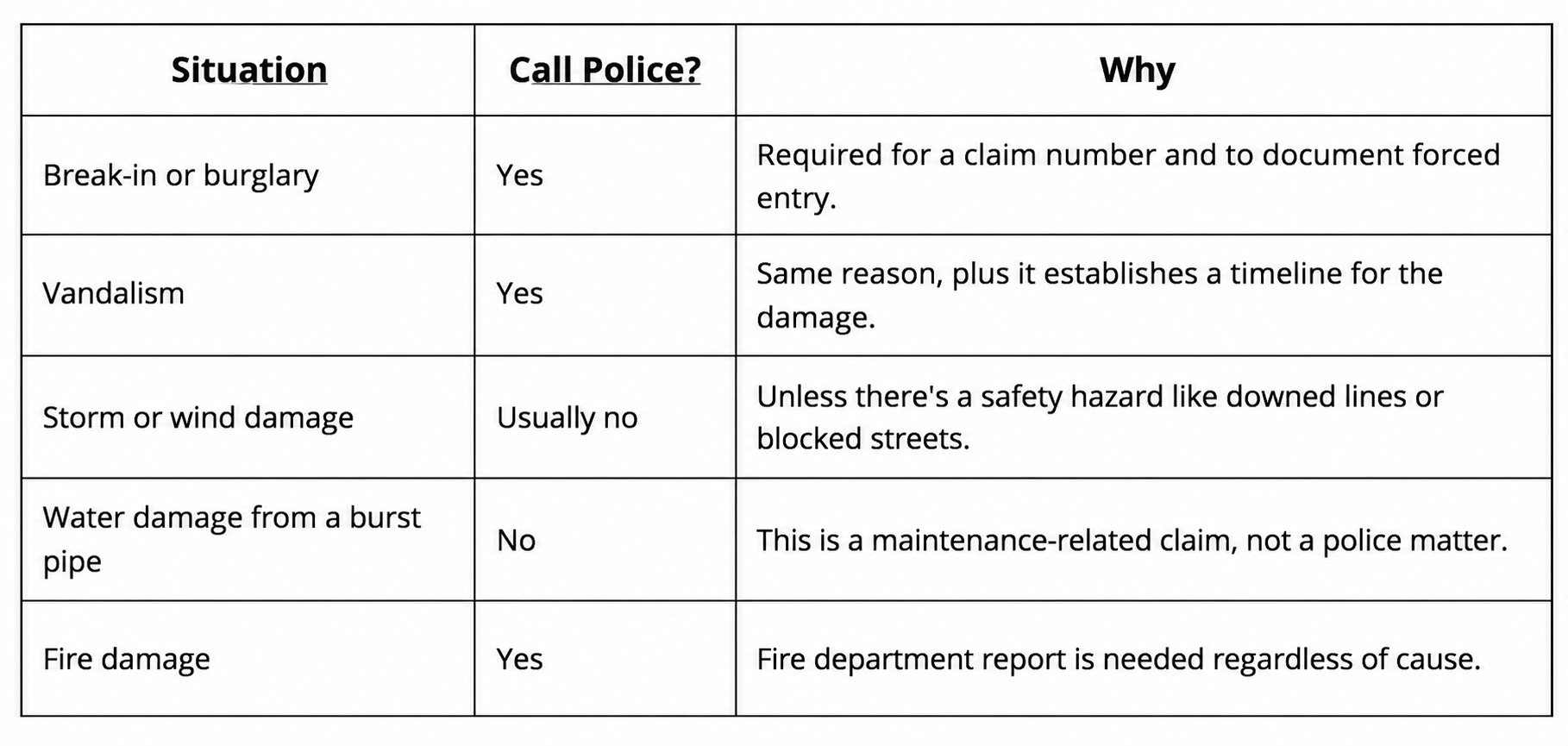
2. Contact the police when appropriate. Report suspected burglary or vandalism and keep the incident or report number. Do not delay emergency assistance or necessary property protection while waiting for police documentation.
3. Photograph and record the damage. When safe, take wide shots and close-ups of broken locks, shattered glass, water damage, damaged roofing, and affected belongings before moving or cleaning anything.
4. Contact TSO Adjustment Service first for claim guidance. Call 215-886-7440 to discuss the damage, the documentation that may be relevant, and possible next steps.
5. Meet your policy's reporting requirements. Notify your insurer within the timeframe required by your policy. Contacting TSO first should not delay a required insurance notification, even if you have not yet spoken with the team.
6. Take reasonable steps to prevent further damage. When safe, arrange appropriate temporary protection, such as boarding a broken window, covering a damaged roof, or stopping an active water leak. Do not delay necessary mitigation while waiting for an inspection or claim review.
7. Keep receipts and records. Save invoices for temporary repairs, emergency services, accommodation, and other expenses that may be relevant to your claim. Coverage for these costs depends on your policy and circumstances.
Why Does Timing Matter So Much for a Property Damage Claim?
Prompt documentation, appropriate mitigation, and timely reporting can help clarify what happened and support the claim review process. Delays may make it harder to establish when damage occurred or determine whether additional damage could have been prevented.
After addressing immediate safety concerns, contact TSO Adjustment Service for guidance on documenting the incident and understanding the next steps. Keep a record of when the damage was discovered, what you observed, and any temporary repairs you arranged.
You must still meet your insurance policy's notification requirements. Do not wait for TSO to respond before making a report that your policy requires within a particular timeframe. Likewise, do not postpone urgent repairs needed to protect the property from further damage.
Should I Call the Police for Both Break-Ins and Storm Damage?
You should always call the police for a break-in or vandalism, since you need an official report for your claim. For storm damage, police aren't usually necessary unless there's downed power lines, blocked roads, or immediate danger to the public.
What Should I Photograph After Property Damage?
Photograph everything before you move or clean up anything, including wide shots of each room, close-ups of specific damage, and anything that shows how the damage happened. More documentation gives your adjuster less room to argue.
A solid documentation pass covers:
- Entry points for a break-in, like broken locks, forced doors, or shattered windows.
- Missing items, ideally cross-checked against receipts or serial numbers if you have them.
- Water lines, ceiling stains, or pooling from storm damage.
- Roof damage from the ground and, if it's safe, from a ladder.
- Any structural cracks, sagging, or visible shifting.
- Personal belongings that were damaged or destroyed.
Video works well too, since it captures context that a single photo can miss, like how far water traveled across a floor or how a whole room was disturbed during a break-in.
Do I Need to Wait for My Insurance Adjuster Before Cleaning Up?
You do not necessarily need to wait for an insurance inspection before taking steps to protect your property. First, document the damage when it is safe to do so and contact TSO Adjustment Service for guidance on the claim process.
You must also follow your policy's notification requirements. Do not delay a required report while waiting for TSO or an insurance adjuster to visit.
Many policies require reasonable steps to prevent further damage. Depending on the situation, this may mean boarding a broken window, arranging temporary roof protection, or stopping an active leak. Avoid entering hazardous areas or attempting repairs that could put you at risk.
Keep photographs, receipts, and records of the work completed. Before undertaking non-urgent permanent repairs, review any applicable policy requirements and consider whether the damage needs to be inspected. Necessary emergency mitigation should not be postponed just to wait for an inspection.
Why Does Philadelphia's Property Crime Rate Matter for How I Prepare?
Philadelphia's elevated property crime rate means break-in and vandalism claims are common enough here that having a plan matters more than it would in a lower-crime area. Homeowners who know the steps ahead of time move faster and protect their claim better when it happens.
With a property crime rate running roughly three times the state average, Philadelphia homeowners deal with this scenario at a much higher rate than most of Pennsylvania. That's not meant to scare anyone, it's just the reality of the city. Knowing the steps before you need them means you're not trying to remember a checklist while you're standing in a house with a broken window and your heart still pounding.
Frequently Asked Questions
What should I do immediately after property damage?
First, make sure everyone is safe and address immediate hazards. Photograph the damage when safe, report suspected criminal activity to the police when appropriate, and contact TSO Adjustment Service for guidance. Notify your insurer within the timeframe required by your policy, without delaying a required report while waiting for assistance. Keep records of temporary repairs and related expenses.
Should I clean up broken glass or water damage right away?
Document the damage first when it is safe to do so. You can then remove immediate hazards or arrange necessary mitigation to prevent further damage. Contact TSO Adjustment Service for claim guidance, but do not delay urgent cleanup or a required insurance notification while waiting for assistance.
What if I can't tell whether damage was from a break-in or something else?
Record what you observed without guessing about the cause. If you suspect a break-in or criminal activity, contact the police when appropriate. Contact TSO Adjustment Service for guidance on documenting the damage and understanding the claim process. Meet any applicable insurance reporting deadlines.
Can I throw away damaged items before the adjuster sees them?
Photograph damaged items and keep relevant records before disposing of them, when practical. However, do not retain hazardous materials or unsafe items if doing so creates a risk. Contact TSO for guidance on documenting the loss, and follow any applicable policy requirements. Do not delay necessary safety measures while waiting for an inspection.