
Water Damage Just Overtook Everything Else as Philadelphia's #1 Claim Driver. But Mold Coverage Still Gets Denied Anyway
Water damage and aging infrastructure are now the leading drivers of rising insurance premiums in Philadelphia, with basement water damage and sewer backup ranking as the most frequent and costly claim types statewide. Yet even as water claims surge, mold caused by that same water often gets denied, since most policies only cover mold under narrow, specific conditions.
Water damage can leave Philadelphia homeowners with an unexpected insurance question: What happens if mold appears after the initial cleanup?
For example, a burst pipe damages your basement, and the insurance company covers the water removal. A few weeks later, mold is discovered behind a wall. Does the original approval mean the mold will also be covered?
Not necessarily. Will insurance pay for mold caused by water damage? It depends on the source of the water, the terms of your policy, any mold-related limits or exclusions, and the circumstances surrounding the damage.
Understanding those differences can help you recognize what needs to be documented and when to seek help reviewing your coverage.
Will Insurance Pay for Mold Caused by Water Damage?
Sometimes, but only under specific conditions. Most standard homeowners policies cover mold if it results from a sudden, accidental event that's already a covered peril, like a burst pipe. Mold from gradual leaks, poor maintenance, or delayed cleanup is typically excluded, even if the original water source would have been covered.
Insurers draw a hard line between two categories:
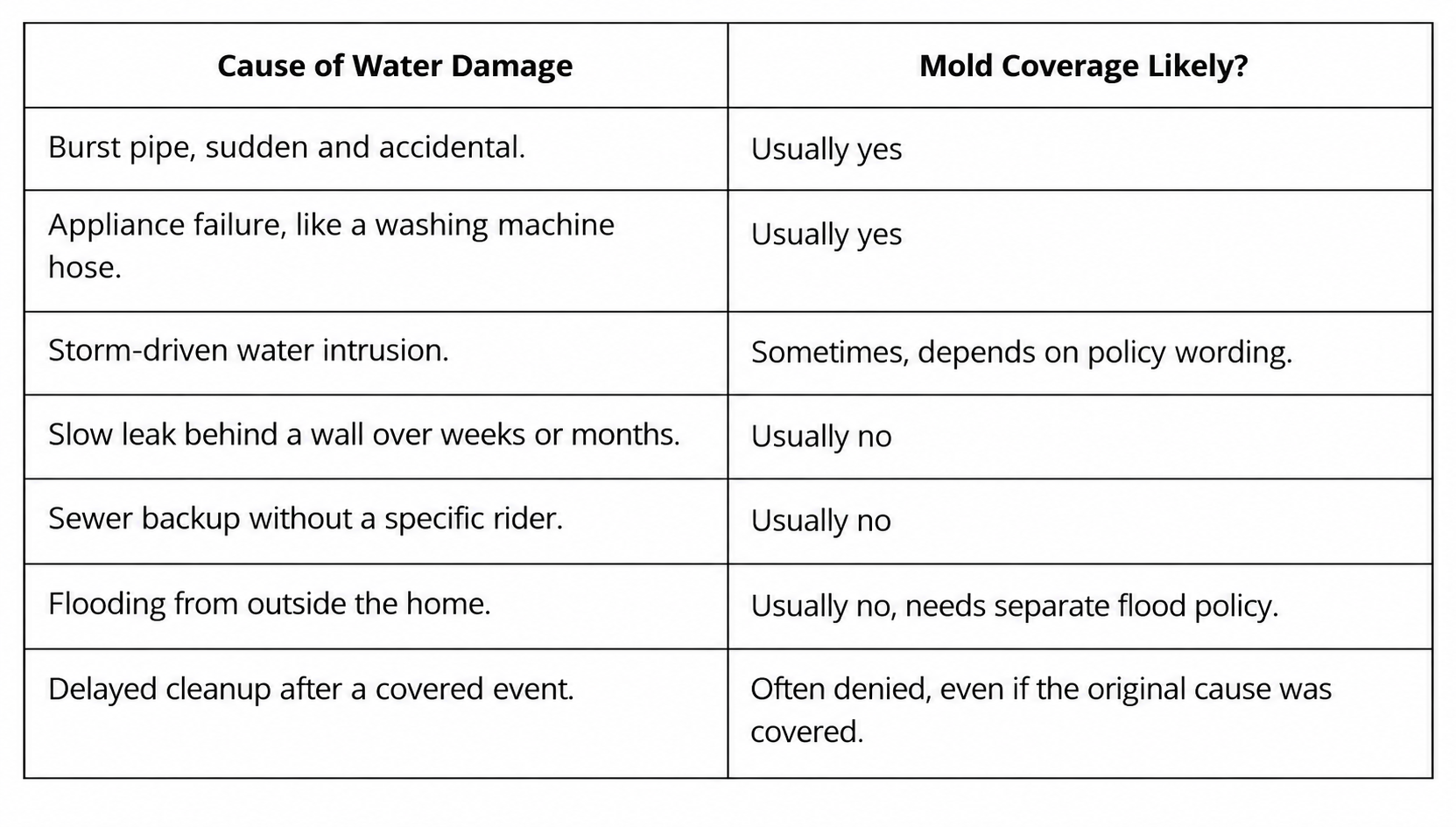
That last row trips up more homeowners than any other. Even when the water damage itself was covered, insurers can deny the resulting mold claim if they decide you waited too long to dry out and clean the affected area.
Why Does Water Damage Get Covered but Mold Doesn't?
Insurers separate water damage from mold because they treat mold as a maintenance and prevention issue rather than a sudden loss. Once mold has time to grow, insurers argue the damage results from neglect or delayed action, not the original water event itself.
This distinction is built directly into most policy language. Standard homeowners insurance typically limits mold coverage to a small dollar amount, often $1,000 to $10,000, even when the underlying water damage claim gets paid in full. Some policies exclude mold entirely unless you've purchased a specific endorsement. Insurers frame this as protecting against homeowners who neglect obvious water problems, but in practice, it also gives them an easy technicality to deny claims where mold was genuinely unavoidable.
What Makes Philadelphia Homes More Likely to Face This Problem?
Philadelphia's aging infrastructure means water damage happens more often here than in newer housing markets, and older basements and plumbing systems create more opportunities for mold to develop before anyone notices.
A few things stack up against Philadelphia homeowners specifically:
- Older plumbing systems that fail more frequently and less predictably.
- Basements in row homes that trap moisture and humidity.
- Sewer backup risk tied to aging municipal infrastructure.
- Homes where water damage isn't discovered right away because of layout or unfinished spaces.
Water damage and aging infrastructure are already driving up claims and premiums across the city. That same infrastructure problem is exactly what creates the conditions for mold, which means Philadelphia homeowners are more exposed to this coverage gap than homeowners in newer suburban markets.
How Can I Improve My Chances of Getting Mold Covered?
You improve your chances by acting fast after any water event and documenting everything before, during, and after cleanup. The faster you respond, the harder it is for an insurer to argue that mold resulted from neglect rather than the original covered event.
Steps that actually make a difference:
- Report water damage immediately, even if it seems minor at first.
- Start drying the area within 24 to 48 hours, since most policies expect prompt mitigation.
- Photograph the water damage before and during cleanup, not just after.
- Keep receipts for fans, dehumidifiers, or professional water removal.
- Get a written timeline of when the water event happened and when cleanup started.
- Ask your insurer directly whether your policy includes a mold endorsement or rider.
If mold shows up despite doing everything right, don't assume the denial is final. Insurers apply mold exclusions inconsistently, and a denial based on "delayed discovery" doesn't always hold up when you have documentation showing you acted quickly.
What Should I Do if My Mold Claim Gets Denied?
Request the specific policy language the denial is based on, then have an independent adjuster review whether that language actually applies to your situation. Many mold denials rely on generic exclusion language that doesn't match the specific facts of the claim.
If you're asking, “Will insurance pay for mold caused by water damage?” the answer may depend on whether the original water event was covered and whether you took reasonable steps to prevent the mold from developing.
This is where a lot of homeowners give up too early. An insurer says "mold is excluded" and that's treated as the final word, when in reality, the exclusion often depends on cause, timeline, and whether the underlying water damage was itself covered. If your water damage claim was approved, that's a strong argument that the mold resulting from it deserves the same treatment, especially if you can show you responded quickly.
Frequently Asked Questions
Does homeowners insurance ever cover mold removal?
Yes, but only when the mold results from a sudden, covered event like a burst pipe, and even then, coverage is often capped at a limited dollar amount unless you have a specific mold endorsement.
Is sewer backup mold automatically excluded from coverage?
Yes, unless you've added a sewer backup rider. Without that endorsement, both the water damage and any resulting mold are typically denied.
How quickly do I need to act after water damage to avoid a mold denial?
As fast as possible, ideally starting cleanup within 24 to 48 hours. Insurers look at response time closely when deciding whether mold resulted from the original event or from delayed action.
Can I add mold coverage to my existing homeowners policy?
Yes, through an endorsement or rider. It's worth asking your insurer directly, especially if you live in an older Philadelphia home with aging plumbing or a basement prone to moisture.
What's the difference between flood-related mold and water damage mold?
Flood-related mold requires a separate flood insurance policy, since standard homeowners insurance excludes flooding from outside the home. Water damage from an internal source like a pipe is a different category entirely.
Should I hire a public adjuster if my mold claim was denied?
It can help, especially if the denial seems based on generic exclusion language rather than the specific facts of your case. An independent review can determine whether the denial holds up.