
Roof Age Is Now a Non-Renewal Trigger in Philly. What That Means for How Fast (or Slow) Insurers Move on Your Claim
Roof age and condition have become one of the most common reasons insurers non-renew or surcharge policies across the Philadelphia metro area. That shift is changing how long a property damage insurance claim takes, especially when a roof is involved, since insurers are now looking harder for reasons to deny, delay, or drop coverage on older homes.
You filed your claim weeks ago. Maybe it's been over a month. And you're still waiting on an answer while the tarp on your roof flaps in the wind. If this sounds familiar, you're not imagining a slowdown.
Roof age has quietly become one of the biggest red flags insurers use in the Philadelphia area. It's not just about premiums anymore. Insurers are increasingly treating an older roof as a reason to non-renew a policy altogether, or to charge more for keeping it. That shift changes how they handle claims too. When a company is already looking for a reason to drop your policy, a roof damage claim gets picked apart instead of processed quickly.
At TSO Adjustment Service, we've seen this play out again and again with Philadelphia homeowners, especially in neighborhoods full of older housing stock. If you're wondering how long does a property damage insurance claim take, the answer depends on the type of damage, the insurer's investigation, and whether the cause of the damage is disputed.
How Long Does a Property Damage Insurance Claim Take?
Most property damage claims take anywhere from a few weeks to a few months, depending on the type and size of the damage. Simple claims can wrap up in two to four weeks, while roof damage, water intrusion, or claims involving a dispute over cause can stretch to 60 days or longer.
Here's a general breakdown of what to expect:
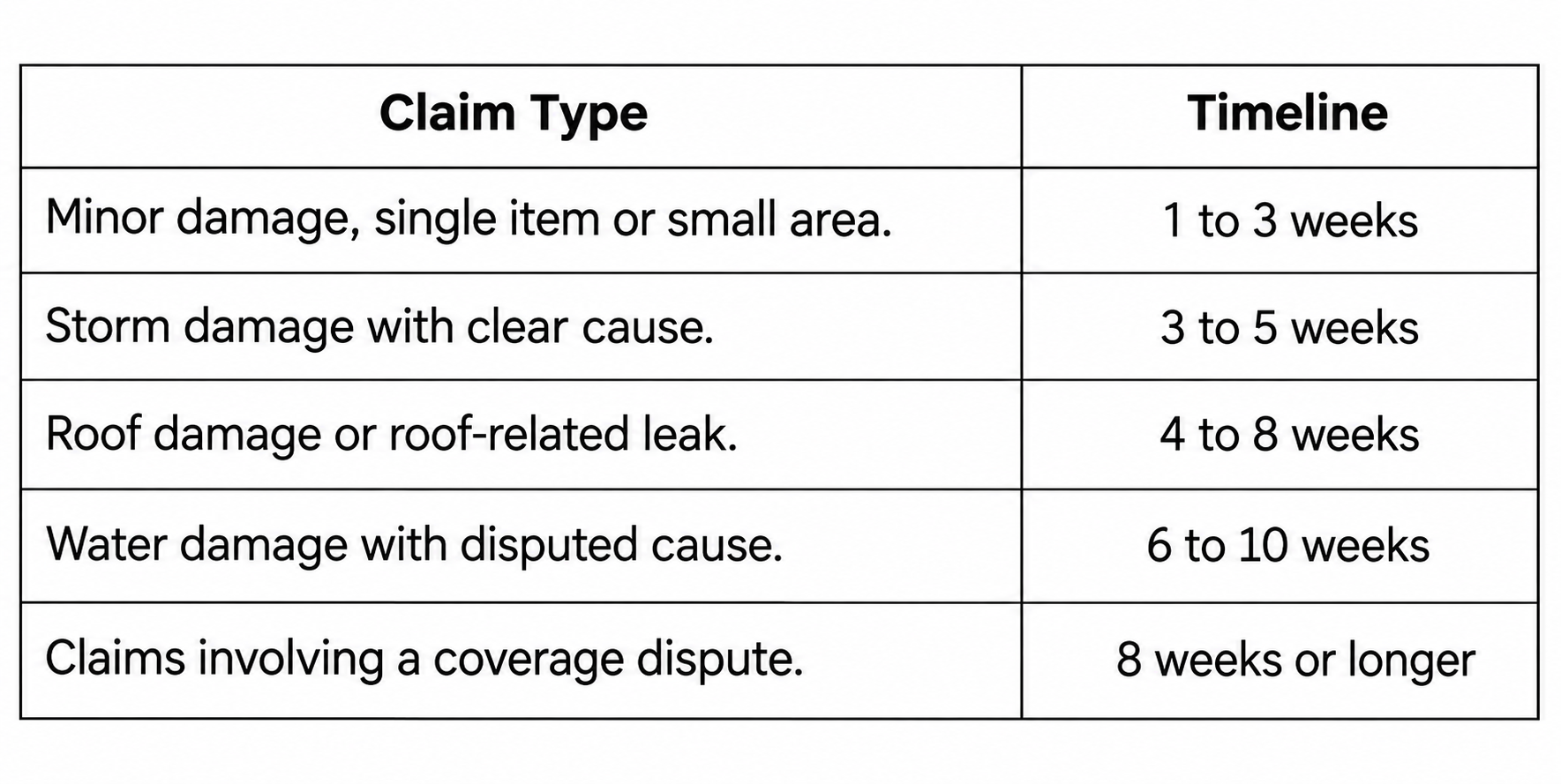
These are averages, not guarantees. Your specific timeline depends on your insurer, the adjuster assigned, how complete your documentation is, and increasingly, how the insurer views the age and condition of your roof.
Why Are Roof Claims Taking Longer in Philadelphia Right Now?
Roof claims are taking longer because insurers are treating roof age as a bigger financial risk than they used to. Instead of processing a roof damage claim quickly, many companies are now using the claim as an opportunity to inspect the roof's overall condition, which slows everything down.
Roof age and condition have become a more common reason for non-renewal or surcharge in the Philadelphia metro area. That means when you file a roof claim, you're not just asking the company to pay for storm damage anymore. You're inviting a closer look at your entire roof, and insurers know that. A slower, more detailed inspection gives them room to argue that some of the damage is pre-existing wear and tear rather than a covered event, which can reduce your payout or delay it further while they build that case.
Does an Older Roof Actually Affect How My Claim Gets Handled?
Yes. An older roof gets more scrutiny during a claim because insurers are looking for evidence that the damage was already developing before the storm or event you're claiming, rather than caused by it.
This creates a specific problem for older Philadelphia homes. A lot of the city's housing stock predates 1900, and even homes built decades later often have roofs well past their expected lifespan. When you file a claim, the adjuster isn't just assessing the damage you're pointing to. They're also checking:
- The overall age and material condition of the roof.
- Signs of prior repairs or patch jobs.
- Granule loss or wear that predates the claimed event.
- Whether the damage pattern matches a single storm or looks gradual.
If they can attribute part of the damage to age rather than the storm, they can reduce what they owe you, or push the claim into a longer review process while they gather that evidence.
What's Slowing Down My Claim if I Have an Older Roof?
A few specific things tend to slow roof claims down once age becomes part of the conversation:
- A second inspection request. Insurers send out a specialist or engineer to reassess, adding weeks to the timeline.
- Requests for maintenance records. They may ask when the roof was last inspected, repaired, or replaced.
- Disputes over cause. Wear and tear versus storm damage becomes a point of negotiation, not a quick determination.
- Depreciation calculations. Older roofs get hit harder by depreciation, which takes longer to calculate and often gets disputed.
None of this means your claim is doomed. It just means you should expect more questions and more time when a roof is involved, especially if your home fits the profile insurers are watching closely right now.
How Can I Keep My Roof Damage Claim From Stalling?
If your roof damage claim is taking longer than expected, start by organizing the available evidence and understanding what is causing the delay. Contact TSO Adjustment Service at 215-886-7440 for guidance on the claim review process and the documentation that may help clarify the damage.
A few practical steps can help:
- Document the damage. Take photographs from multiple angles when it is safe to do so, including wide shots and close-ups.
- Gather roof records. Collect available inspection reports, repair invoices, and records showing when the roof was last repaired or replaced.
- Keep communication records. Save letters, emails, inspection findings, and requests for additional information from your insurer.
- Ask about the delay. Request a written explanation of any outstanding inspection, documentation request, or coverage question.
- Review the assessment. If you disagree with the insurer's findings, consider whether an independent roof inspection or public adjuster review may be appropriate.
- Meet required deadlines. Follow the reporting and cooperation requirements in your policy. Contacting TSO should not delay a required notification or response to your insurer.
If the insurer is disputing whether the damage resulted from a covered event or from pre-existing wear and tear, TSO can help you understand the claim documentation and discuss whether further review may be appropriate.
Do not postpone necessary temporary repairs or reasonable steps to prevent additional damage while waiting for an inspection or claim decision. Keep records of the damage and any work completed.
If your roof damage claim has stalled, contact TSO Adjustment Service at 215-886-7440 before contacting your insurer when practical. We can help you understand the documentation relevant to your claim, review the available damage assessment, and discuss possible next steps.
Do not delay any insurance notification or response required by your policy while waiting for assistance. If the roof is exposed to the elements, take reasonable steps to protect the property from further damage when it is safe to do so.
Frequently Asked Questions
How long does a property damage insurance claim take?
A property damage insurance claim may take several weeks or longer, depending on the type and extent of the damage, the investigation, the documentation available, and whether coverage or the cause of damage is disputed. There is no single timeline that applies to every claim. If your claim is delayed, contact TSO Adjustment Service for guidance while continuing to meet any applicable policy deadlines.
Can my insurer deny a roof claim just because the roof is old?
Not outright, but they can argue that some or all of the damage is due to wear and tear rather than a covered event, which can reduce or delay your payout.
What documents help move a roof damage claim forward?
Photographs of the damage, available roof inspection and repair records, contractor estimates, and a clear timeline of the incident may help clarify the claim. Keep copies of correspondence with your insurer and respond to reasonable documentation requests within any applicable deadlines.
Is there a legal limit on how long an insurer can take to process a claim?
Pennsylvania requires insurers to act on claims within a reasonable timeframe, though "reasonable" varies by claim complexity. Extended delays without explanation can sometimes be challenged.
Should I get my own roof inspection before filing a claim?
It can help, especially if you're worried about a dispute over the roof's condition. An independent inspection gives you your own documentation to compare against the insurer's findings.
Does roof age affect my premium even if I never file a claim?
Yes. Roof age and condition have become a common trigger for non-renewal or surcharges in the Philadelphia area, regardless of claim history.